Thursday, November 10, 2016

Driving.ca; Car Review: 2017 Nissan Maxima Platinum

by Brian Harper of www.driving.ca

Big sedans aren't as popular as they used to be, but the Nissan Maxima adds some spark to the segment

It took eight generations and some 35 years to get to the point where Nissan can make the claim its flagship Maxima four-door is “a sports car in sedan clothing” without some sort of response bordering on incredulity. The slow transition from the now painfully square, mild-mannered Datsun 810 to the robust and curvaceous 2016 Maxima has been agonizing at times, an impatient wondering as to when the company was going to build a midsize car that had as much performance as function – some European sport sedan-style zip.

Now that I’ve finally gotten around to driving one — a 2017 model in top-of-the-line Platinum trim — any thoughts of admonishing Nissan for its tardiness are banished. This version is not just sporty; it’s deceptive, with performance and handling to go with a smooth ride, plus luxury touches and premium content exceeding reasonable expectations of the Platinum’s $44,200 price tag.

But it’s the awakened performance that first grabs one’s attention. And it’s not as though Nissan went radical with the car. Under the hood is the familiar 3.5-litre VQ-series V6, only thoroughly reworked (60 per cent new parts compared with the previous engine) and now pushing out 300 horsepower and 261 lb.-ft. of torque. In truth, the engine feels stronger; the car shows distinct verve off the line when the gas pedal is given a prod.

Though I’d much prefer an automatic with a specified number of gears, there’s little complaint regarding the Maxima’s Xtronic continuously variable transmission, which seems well matched to the V6’s torque and comes with both Normal and Sport modes. Its wide gear ratio range allows for strong acceleration from a standing start, while Nissan says credit goes to the D-Step shifting logic for both the rapid shifts at full throttle and for holding the engine’s speed when hooning around corners, which allows for smooth acceleration when exiting said corners.

In Sport, zero to 100 km/h is reportedly less than six seconds — strong for a front-drive family car, if not mind-blowing. The drive mode selector not only adjusts throttle response and transmission tuning, but also steering feel and “active sound enhancement” tuning. But, while the exhaust note has some musicality to it, the engine itself is a bit coarse when under the hammer.

The other benefit to this re-engineering effort is a claimed 15 per cent increase in highway fuel economy to 7.8 L/100 km over the previous-generation Maxima; city fuel economy is rated at 11.1 L/100 km. I put 700 kilometres on the car during my week with it, the bulk of it highway cruising, and averaged 9.9 L/100 km.

While the sedan wouldn’t be my first choice for racetrack lap sessions, Nissan’s engineers clearly spent some time working under the car to imbue it with a decent measure of on-road handling. Up front is the usual strut/coil spring design, but ZF Sachs monotube dampers are added to the rear end’s independent multi-link double wishbone setup. Thick stabilizer bars are found at both ends.

Shapely and far more distinct than many of its rival sedans, the Maxima’s styling, in truth, doesn’t completely blow me away, looking over-designed with its aggressive character lines, deeply scalloped doors and “floating roof.” Yet, I do like the boldness of Nissan’s signature “V-motion” grille and boomerang-style lights. Still, Nissan’s 3.5L V6-powered Altima, which shares the same platform and pretty much all the mechanicals as the Maxima (although with 30 less horsepower), is a more cohesive design.

The Altima is also roomier, at least for back-seat passengers. While there’s tons of room up front for the tall and leggy in the Maxima, if those in the back are equally so, they’re going to find their knees jammed in the front seat back and their heads brushing the headliner.

For the rest of the article and more pictures, follow this source link below;

Nissan Unveils Special Edition Juke And Refreshed Versa Ahead Of LA


by Gabe Beita Kiser of www.carbuzz.com

Nissan keeps its smaller cars relevant with some neat toys and visual upgrades.
We’re less than a week away from the once a year event where automakers, journalists, and fans alike gather under the roof of the Los Angeles Convention Center to see the flashy new models at the LA Auto Show. A handful of automakers are scheduled to debut new models, and one of these is Nissan. While the new Sentra Nismo is at the tiptop of our wish list, Nissan has just released information on two new noteworthy cars, the new Versa Note and a special edition of the Juke CUV.
 
The latter of the two isn’t the Nismo Juke that we’re obsessed with, but that doesn’t mean that its owners won’t feel special. Built for the fans, the Black Pearl Edition Juke is going to be rare with only 1,250 models slated for production. Only 250 units will go to Canada while the rest will be shipped to US buyers, both of which can opt for either all-wheel drive or front-wheel drive configurations. The crossover’s sinister styling will be an echo of a limited edition 1978 280Z using contrasting white trim on the black body. The Black Pearl Edition will feature the same 1.6-liter inline-four as the standard Juke that’s mated to a CVT that mimics the shift patterns of a standard transmission.
 
Additionally, the smaller version of Nissan’s smallest car has gotten a refresh that gives it the same face as the rest of Nissan's sedan lineup. The signature V Motion grille makes an appearance here along with the rear fascia from the Versa Note SR. Complimenting this change is two new available colors, Monarch Orange or Deep Blue Pearl (Nissan has a thing for Pearls apparently). Minor interior enhancements take customer demands into account by enlarging the cup holders, adding another 12v outlet, and the relocation of a 12v outlet and accompanying USB input to the center console. We’ll see these two models in the metal at the LA Auto Show alongside two new models set to be released on the 15th and 16th of this month.
 
Source;
http://www.carbuzz.com/news/2016/11/10/Nissan-Unveils-Special-Edition-Juke-And-Refreshed-Versa-Ahead-Of-LA-7736367/


Honda now has independent shops checking for Takata airbags


by David Undercoffler of www.autoweek.com

Collision shops now have access to affected VIN database

Honda has added yet another weapon in its battle to find owners of vehicles with a potentially faulty Takata airbag module: independent repair shops.

The automaker has teamed up with CCC, one of the largest software providers to collision repair shops in the industry, to create a program that flags a Honda or an Acura vehicle with an open recall notice when it's brought in for collision repair.

The collaboration "will augment and extend our existing recall notification process, providing us with an additional touch point to help reach consumers with recalled yet unrepaired vehicles," said Leigh Guarnieri, the national collision marketing manager for Honda. "Safety is everyone's responsibility."

22,000 shops

CCC's program, dubbed True Recall, was rolled out in October to all 22,000 repair shops across the country that use its data network. When an estimate is being written, CCC's system will run the vehicle's VIN against a database provided by Honda.

If the vehicle has an open Takata airbag recall that hasn't been fixed, a notification will pop up on the screen and a copy of the recall will be printed for the consumer. The notification advises the body shop to tell the owner of the vehicle, check with the owner on what Honda or Acura dealership they'd like to use and then the body shop is encouraged to reach out to that dealership to facilitate the repair on the customer's behalf.

The notification of customers via independent repair shops outside Honda's purview speaks to the urgency the automaker faces in identifying as many vehicles as possible that could have the potentially lethal Takata airbag modules inside.

In October, Honda and U.S. regulators confirmed the 11th U.S. death linked to faulty Takata airbag inflators. Another five deaths have been identified globally.

Pay per VIN

The Takata inflator crisis -- the largest safety recall in U.S. history -- has affected 15 automakers and led to the recall through 2019 of nearly 70 million inflators in U.S. vehicles. Honda and Acura vehicles make up 10.7 million of that total.

Honda has gone so far as to scour salvage yards and auto recyclers across the country to find its vehicles with affected airbag modules and has purchased thousands to keep them from returning to the road.

Honda approached CCC with the idea for the program, citing its 60 percent market share of the industry's data services, with Mitchell and Audatex splitting the rest. If the collaboration between Honda and CCC proves successful, the automaker might reach out to the other companies to explore a similar program.

The automaker pays CCC for each VIN it identifies as having an open recall, and it recently has averaged more than 1,000 VIN matches a day, a Honda spokesman said. Many of these are older-model Hondas that have passed through multiple owners, often the hardest consumer cohort to reach with a vehicle recall.

Eight of those matches have come from Vatche Derderian's three Fix Auto shops in the Los Angeles area. Fix Auto was already using CCC's data system, so Derderian's shops didn't need to do anything to enable the notifications.

"I definitely applaud Honda for putting it out there to do this because then it gets us more involved with the OEM and what's going on with their vehicles," Derderian told Automotive News.

Plus, customers affected have been taken aback by the level of service such a notification implies, despite not coming from a Honda dealer.

"It feels really good to do something for the consumer beyond just repairing their vehicle," Derderian said.

The article "Honda enlists independent shops in recall effort" originally appeared on autonews.com


Bold and Sophisticated Styling and Turbo Engine Power Restate the All-New 2017 Honda CR-V as the Outright Benchmark Compact SUV

 
  • America's Best-Selling SUV gains more powerful turbo engine offering class-leading fuel efficiency
  • Honda Sensing™ technology now standard on EX and higher trims
  • New Display Audio featuring Apple CarPlay™ and Android Auto™
  • More premium interior boasts larger cabin with best-in-class rear seat legroom and larger, more versatile cargo space
DETROIT – Honda has pulled the wraps off an all-new, fifth-generation CR-V, America's best-selling SUV over the past 20 years. The completely redesigned and reengineered 2017 CR-V, going on sale this winter, boasts bold new styling, a more premium interior, the model's first-ever turbocharged engine and a host of new features and technologies aimed at maintaining CR-V's status as the outright benchmark in the highly popular compact SUV segment. American car buyers have purchased nearly 4 million CR-Vs since its U.S. launch in 1997.

"The new Honda CR-V raises the bar in every imaginable way, delivering more performance, space and premium content together with higher fuel economy ratings and value than ever before," said Jeff Conrad, senior vice president and general manager of the Honda Division. "Customers are going to love what they see and what they experience behind the wheel of this new CR-V."

Bold and Sophisticated New Design
The new CR-V styling heads in a fresh new direction with an aggressive attitude, thanks to crisp and sharp front-end design elements, aggressive stylized headlights surrounded by a wing-shaped LED DRL array on all trims, and wide, muscular fenders. The long hood, longer wheelbase, short rear overhang and dual exhausts give the new CR-V a more sophisticated and athletic presence.

The CR-V's new windswept front end appearance includes signature Honda LED headlights (Touring trim), a Honda-first Active Shutter Grille that lowers aerodynamic drag, uprated aluminum alloy wheels (sizes 17 to 18 inches depending on trim) and narrower A-pillars for improved visibility. Adding convenience is a Honda-first available Hands-Free Access Power Tailgate, which allows opening and closing the tailgate with a foot activated sensor under the rear of the vehicle. Available Auto High Beam with High Beam Support (AHB) headlights, chrome garnishes, rain-sensing windshield wipers, roof rails and numerous Genuine Honda Accessories also expand beauty, convenience and functionality.

New Powertrain and Chassis Technology
The 2017 CR-V in EX and higher trims will feature CR-V's first ever turbocharged engine, a more powerful and fuel-efficient 1.5-liter DOHC, direct-injected and turbocharged in-line 4-cylinder powerplant rated at 190 horsepower (SAE net) and delivering incredibly refined and responsive performance across the engine's full operating range. Combined with the CR-V's more aerodynamic body, the new turbocharged powerplant will garner the highest EPA fuel economy ratings in the compact SUV class. CR-V LX trims will be powered by a 2.4-liter DOHC, direct-injected i-VTECÔ engine, and both engines will be mated to a smooth shifting and sporty continuously variable transmission (CVT) with Honda G-Shift control logic. Detailed specifications, including EPA ratings, will be provided closer to launch.

The all-new body and chassis design in the 2017 CR-V provides more agile and confident handling, greater refinement, additional ground clearance and superior overall versatility. Its front MacPherson strut and rear multi-link suspension utilize specially tuned low-friction dampers, with both FWD and AWD models including tubular front and solid rear stabilizer bars that promote quick turn-in and flatter cornering. Dual-pinion, variable ratio Electric Power Steering (EPS) also contributes to the CR-V's direct and satisfying steering feel.

More Premium, Spacious and Technologically Advanced Interior
The 2017 CR-V also raises the bar for interior refinement, utility and premium features in the compact SUV class. The more spacious cabin, with top-in-class interior space and the best rear seat legroom in its class, features upgraded materials throughout, including a new soft-touch instrument panel and more intricately stitched seats. A color TFT driver information interface (DII) center meter display adds to the handsome new design aesthetic.

The CR-V offers the latest in-vehicle connectivity and audio performance with a new generation of advanced technologies. Available features include a 7-inch touchscreen Display Audio interface with Android operating system that now features a physical volume knob as well as an available new Honda Satellite-Linked Navigation System™ developed in cooperation with the experts at Garmin®. The CR-V 's Display Audio system is compatible with the Apple CarPlay™ and Android Auto™ platforms, giving customers seamless integration of key smartphone features and functions, including smartphone-powered GPS navigation and voice-controlled search capabilities.

Some of the key new comfort and convenience features available on the 2017 Honda CR-V include remote engine start, dual-zone climate controls, heated side mirrors, an Electric Parking Brake (EPB), rear USB charging ports, front passenger seat with 4-way power adjustment and driver's seat with 8-way power adjustment and 4-way power lumbar support and heated front seats.

Advanced Safety and Driver-Assistive Technology
The refreshed 2015 CR-V debuted the Honda Sensing suite of advanced safety and driver-assistive technologies, helping it capture the 2015 Motor Trend Sport Utility of the Year honors. The 2017 CR-V further expands the application of Honda Sensing as standard equipment on EX and higher trims, expected to account for upwards of 75 percent of CR-V sales.

Honda Sensing includes Collision Mitigation Braking (CMBS) with Forward Collision Warning (FCW) and pedestrian sensing capability, Road Departure Mitigation (RDM) with Lane Departure Warning (LDW), Adaptive Cruise Control (ACC) with low-speed follow and Lane Keeping Assist (LKAS). Additional new driver-assistive technologies include the available Blind Spot Information (BSI), Rear Cross Traffic Monitor (CTM) and Auto High Beam (HSS) headlights.

Utilizing Honda's next-generation Advanced Compatibility Engineering™ (ACE™) body structure, the 2017 CR-V targets the highest available collision safety ratings, including an NCAP 5-star Overall Vehicle Score from the National Highway Traffic Safety Administration (NHTSA) and a TOP SAFETY PICK+ rating from the Insurance Institute for Highway Safety (IIHS), including a SUPERIOR rating for frontal crash prevention when equipped with Honda Sensing.

The 2017 Honda CR-V will be produced at three plants in North America – in East Liberty, Ohio; Alliston, Ontario, Canada; and, for the first time, in Greensburg, Indiana using domestic and globally sourced parts. Engines for the new CR-V will be manufactured in Anna, Ohio and in Alliston, Ontario, with the CVT being produced in Russells Point, Ohio. 

Source;
http://www.hondanews.com/releases/bold-and-sophisticated-styling-and-turbo-engine-power-restate-the-all-new-2017-honda-cr-v-as-the-outright-benchmark-compact-suv

2017 Honda Pilot Gets Apple CarPlay™ and Android Auto™

  • Pilot adds latest in connectivity with Apple CarPlay and Android Auto
  • Black interior now available on all trims with White Diamond Pearl exterior
  • Pilot recognized among Best Family Cars by KBB.com, Parents Magazine and Edmunds.com
TORRANCE, Calif., November 4, 2016 – Honda continues to strengthen its position in the three-row SUV segment with fresh updates to the award-winning Honda Pilot for the 2017 model year. The 2017 Pilot will now be available with Apple CarPlay™ and Android Auto™ functionality, a new fingerprint resistant touchscreen and an expanded interior color palette. The 2017 Honda Pilot goes on sale beginning Monday, November 7, with a starting manufacturer's suggested retail price (MSRP)1 of $30,595 for LX 2WD and $32,395 for LX AWD.

"The all-new third-generation Pilot has been a huge hit with SUV buyers," said Jeff Conrad, Honda Division senior vice president and general manager. "For 2017, we're making Pilot even more appealing with new technology and options that our customers are seeking."

Honda was among the first automakers to incorporate Apple CarPlay and Android Auto, starting with the 2016 Accord and Civic. For 2017, Pilot EX and above trims will now feature Apple CarPlay™ and Android Auto™ functionality integrated into an improved 8-inch Display Audio touchscreen. These models will also see application of a new coating to reduce the appearance of fingerprints on the screen while retaining high glare resistance. Customer choice is also further enhanced for 2017 with extended availability of a black interior, now available on all trims optioned with the White Diamond Pearl exterior paint (previously available only on Elite).

Since its introduction in the summer of 2015, the Honda Pilot has earned a host of awards and accolades, including being named one of the "Best Cars for the Money" by U.S. News & World Report; "Best SUV of 2016" by Hispanic Motor Press; "Best Family Cars of 2016" by KBB.com, Parents Magazine and Edmunds.com; and as a finalist for 2016 North American Truck/Utility of the Year.

2017 Pilot Pricing and EPA Fuel Economy Ratings
Model Transmission MSRP1 EPA2
City/HWY/Combined MPG
LX 2WD $30,595 19/27/22
LX AWD $32,395 18/26/21
EX 2WD $33,030 19/27/22
EX AWD $34,830 18/26/21
EX w/Honda Sensing 2WD $34,030 19/27/22
EX w/Honda Sensing AWD $35,830 18/26/21
EX-L 2WD $36,455 19/27/22
EX-L AWD $38,255 18/26/21
EX-L w/ Honda Sensing 2WD $37,455 19/27/22
EX-L w/ Honda Sensing AWD $39,255 18/26/21
EX-L w/Navi 2WD $37,455 19/27/22
EX-L w/Navi AWD $39,255 18/26/21
EX-L w/RES 2WD $38,055 19/27/22
EX-L w/RES AWD $39,855 18/26/21
Touring 2WD $41,670 20/27/23
Touring AWD $43,470 19/26/22
Elite AWD $47,070 19/26/22

Family-Friendly Utility
The Pilot builds on its reputation for interior space, versatility and utility with comfortable seating for up to eight passengers and a cargo area that can hold an 82-quart cooler without compromising third-row seating capability. Third-row entry and exit is easy and intuitive courtesy of the available one-touch second-row seat on EX-L and above models, and large third-row entryway.
The Pilot's center console features a cavernous storage compartment capable of accommodating items as large as a full-size iPad or a purse. And with its seamless cover in the closed position, the console provides a convenient, non-slip surface for items that the driver or front passenger may need close at hand.

Powertrain
The 2017 Pilot delivers refined, powerful and fuel-efficient performance courtesy of its 3.5-liter, direct-injected i-VTEC® V-6 engine with Variable Cylinder Management™ (VCM™) cylinder deactivation technology producing peak output of 280 horsepower and 262 lb.-ft. of torque.3 The engine is matched to a choice of two advanced transmissions – a 6-speed automatic transmission or, on upper trims, a 9-speed automatic transmission – both delivering refined, responsive and fuel-efficient performance.

These powertrains combine with a light yet rigid unit-body structure and aerodynamically efficient body and chassis designs that result in class-leading EPA fuel economy ratings topping out at 20/27/23 mpg (city/highway/combined) for two-wheel-drive models and 19/26/22 mpg for all-wheel-drive models.2

Intelligent Variable Torque Management (i-VTM4™) AWD System
The Pilot's available Intelligent VTM4 (i-VTM4) is the most sophisticated and technologically advanced all-wheel-drive system offered in a mainstream, three-row SUV. This entirely more capable system progressively distributes optimum torque between the front and rear axles and dynamically distributes engine torque between the left and right rear wheels. Benefits include superior all-weather handling and neutral, accurate steering under power that is more effective than front-drive, rear-drive or conventional all-wheel-drive systems.

Intelligent Traction Management
All Pilots feature a button-operated Intelligent Terrain Management System that offers different operating modes, for the AWD: Normal, Snow, Mud and Sand; and for the FWD: Normal and Snow. Developed, tuned and tested in challenging locations in the U.S. and around the world – including Imperial Dunes "Glamis", California; Moscow, Russia; and Dubai, United Arab Emirates – the Intelligent Traction Management system allows the driver to select the operating mode that best suits the driving conditions by simply pushing a button on the vehicle's center console. Based on the setting selected, the system adjusts the drive-by-wire map, transmission shift map, Vehicle Stability Assist™ and i-VTM4 torque distribution for AWD-equipped models for optimal performance in a variety of road or surface conditions.

Advanced Safety and Assistive Performance
In keeping with Honda's commitment to safety and driver convenience, the Pilot is available with Honda Sensing™, a suite of technologies designed to expand the driver's situational awareness while sensing and responding to potential road hazards, including other vehicles, road obstacles and even pedestrians, even to the point of mitigating the possibility or severity of a collision. The Pilot includes a standard Multi-Angle Rearview Camera and an available suite of safety and driver assistive technologies that includes LaneWatch™ display, a blind spot information system, Collision Mitigation Braking System™ (CMBS™), Lane Departure Warning (LDW), Forward Collision Warning (FCW), Lane Keeping Assist System (LKAS), Adaptive Cruise Control, Road Departure Mitigation (RDM) system and Rear Cross Traffic Monitor.

The 2017 Pilot earned top safety ratings from the National Highway and Traffic Safety Administration (NHTSA), including a 5-Star Overall Vehicle Score, and is expected to earn a Top Safety Pick rating from the Insurance Institute for Highway Safety (IIHS), including a GOOD rating in all crash modes and a SUPERIOR rating for front crash prevention. The Pilot incorporates Honda's next generation Advanced Compatibility Engineering™ (ACE™) body structure, designed to efficiently absorb and disperse the energy from a frontal collision, along with ultra-high-strength door rings designed to help better protect occupants.

Standard safety and driver-assistive features include four-channel anti-lock brakes (ABS) with Brake Assist and Hill Start Assist; Vehicle Stability Assist™ (VSA®) with Traction Control; dual-stage, multiple-threshold front airbags, driver and front passenger side airbags and side-curtain airbags for all outboard seating positions; and a Tire Pressure Monitoring System (TPMS) with real-time display of individual tire pressures.

Pilot Manufacturing
The Honda Pilot was designed and developed by Honda R&D Americas, Inc., in Los Angeles and Ohio, and is manufactured exclusively by Honda Manufacturing of Alabama, LLC in Lincoln, Alabama using domestic and globally sourced parts.

About Honda 
Honda offers a full line of reliable, fuel-efficient and fun-to-drive vehicles with advanced safety technologies sold through over 1,000 independent U.S. Honda dealers. The Honda lineup includes the Fit, Civic and Accord passenger cars, along with the HR-V, CR-V and Pilot sport/utility vehicles, the Ridgeline pickup and the Odyssey minivan.

Honda has been producing automobiles in America for 33 years and currently operates 19 major manufacturing facilities in North America. In 2015, more than 99 percent of all Honda vehicles sold in the U.S. were made in North America, using domestic and globally sourced parts.

1 MSRP (Manufacturer's Suggested Retail Price) excluding tax, license, registration, $880 destination charge and options. Dealer prices may vary.
2 Based on 2017 EPA mileage ratings. Use for comparison purposes only. Your mileage will vary depending on how you drive and maintain your vehicle, driving conditions and other factors.
3 Peak power: 280 HP @ 6000 RPM (SAE net), peak torque: 262 ft-lb (355 Nm) @ 4700 RPM (SAE net)

Source;
http://www.hondanews.com/releases/2017-honda-pilot-gets-apple-carplay-and-android-auto

Honda reveals WR-V compact SUV

Get ready for the Winsome Runabout Vehicle. Honda Automoveis do Brasil Ltda., the Honda automobile production and sales subsidiary in Brazil, exhibited the world premiere of a planned production model, the all-new Honda WR-V compact SUV at the Sao Paulo International Motor Show 2016. Here’s the news from Honda:
 
Based on the research of customer needs in South America, Honda R&D Brazil developed the WR-V as a vehicle that realizes a “tough and urban” SUV design as well as excellent utility and a spacious cabin within a compact body size. Moreover, the all-new WR-V also features outstanding fuel economy and stable handling performance, which accommodates various needs in the daily lives and recreational activities of customers who enjoy active lifestyles.

Honda is planning to sell the all-new WR-V in South America, and the market introduction in Brazil is scheduled to be in the first half of 2017.

Takahiro Hachigo, President, Chief Executive Officer and Representative Director of Honda Motor Co., Ltd., said, “Ever since we began business in Brazil in 1971, Honda has been supported by a total of 24 million customers in Brazil through their purchase of our motorcycles, automobiles and power products. Introduction of this all-new WR-V is a testament to Honda’s commitment to the South American market, and we will continue to deliver more products unique to Honda that please our customers,”

Source;

Friday, June 24, 2016

2016 (2017) Honda Freed rendered based on patent leak (Not for North America)

2016/2017 Honda Freed Patent Leak

While its North American subsidiary is busy working on the fifth generation Honda CR-V, back home Honda is testing the Honda Freed MPV’s second generation model.

The second generation Honda Freed is said to launch in Japan this August. Already spied testing several times in Japan, and leaked in a patent image earlier this week, a speculative rendering by Adrians Ramadhani gives a clear look at the City-based MPV’s stance.

The next-gen Honda Freed is reported to measure 4,250 mm in length, 1,695 mm in width and 1,710 mm in height (35 mm longer and at least 5 mm taller than the current JDM-spec Honda Freed).

The 1.5-litre naturally aspirated petrol engine will reportedly continue serving in the second generation. The new 1.0-litre turbocharged petrol engine to be offered in the tenth-gen Civic later this year, will not be available on the Freed during its launch, another report said.

As for the hybrid variant which will be, the IMA (Integrated Motor Assist) will be replaced by the i-DCD dual-clutch hybrid system. The hybrid system’s combustion engine will be a 1.5-litre naturally aspirated unit, mated to an electric motor, and the transmission will be a 7-speed dual-clutch unit.

Source;
http://indianautosblog.com/2016/06/2016-honda-freed-rendered-based-patent-leaks-236008

Thursday, June 23, 2016

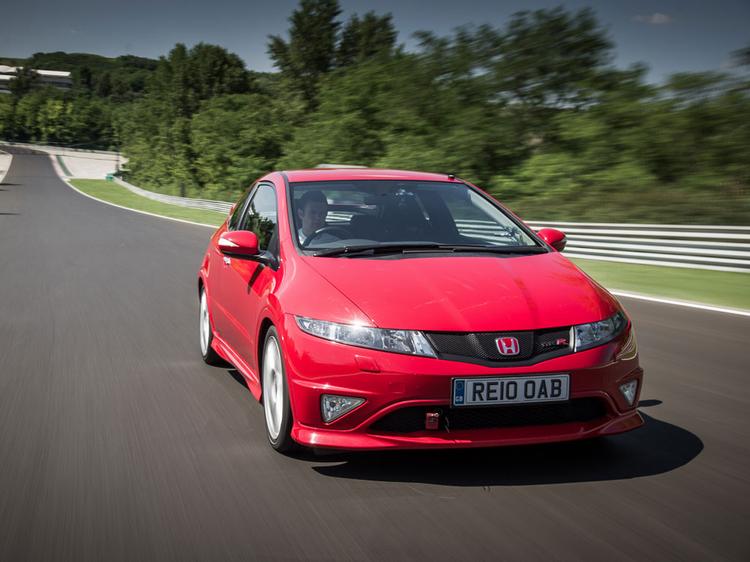
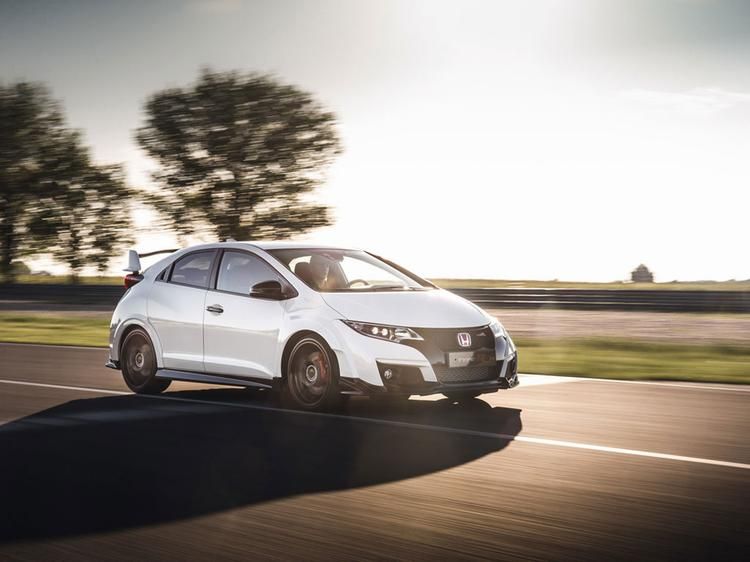
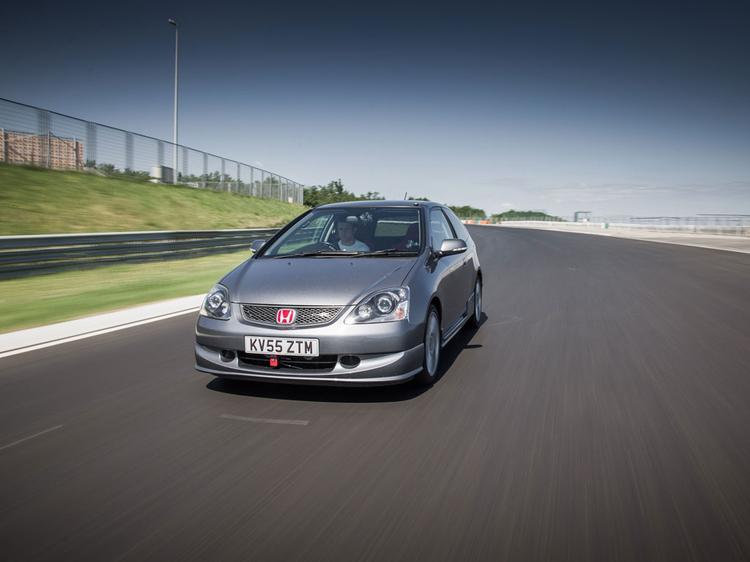
Honda Civic Type R generations: EP3 v. FN2 v. FK2

by Matt Bird of www.pistonheads.com

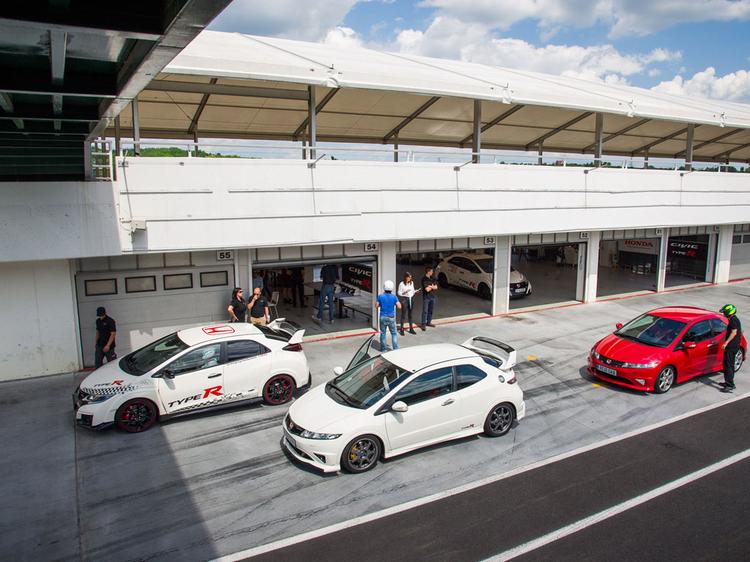
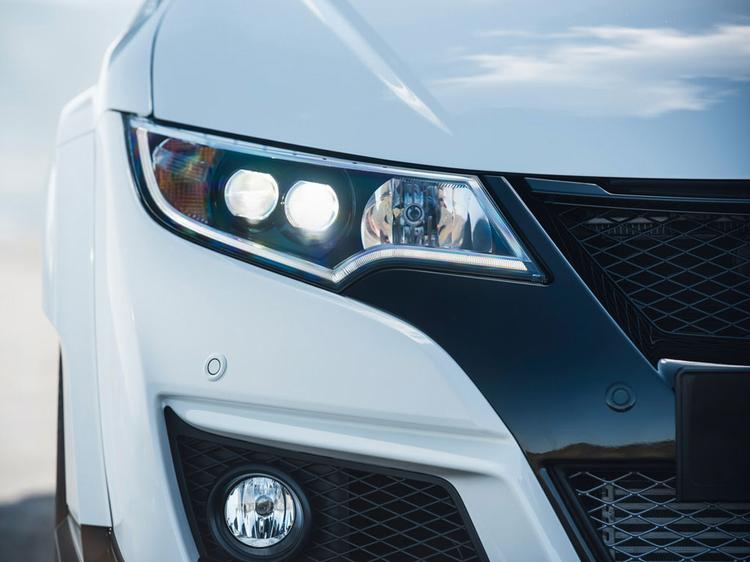
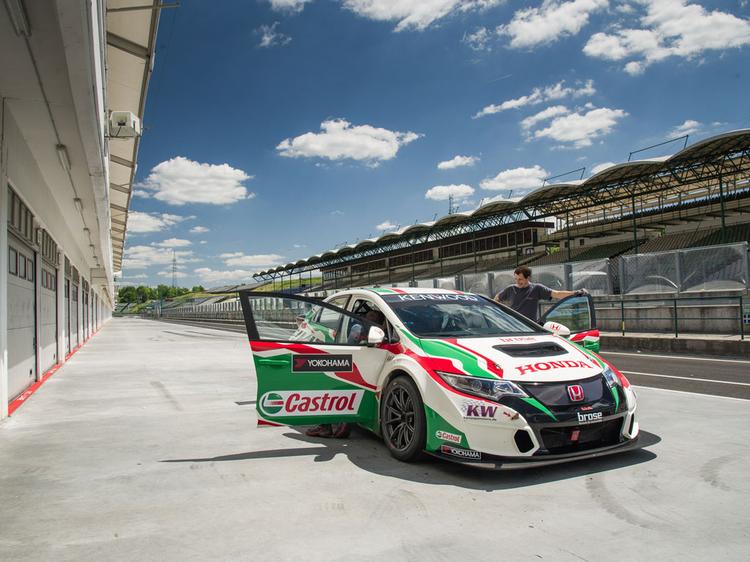
So there was a little more to the Honda Hungaroring trip than witnessing a lap record. There was also opportunity to try the old Civic Type Rs on circuit; with a current FK2 having been on the PH Fleet since March, a true three-car comparison was long overdue.

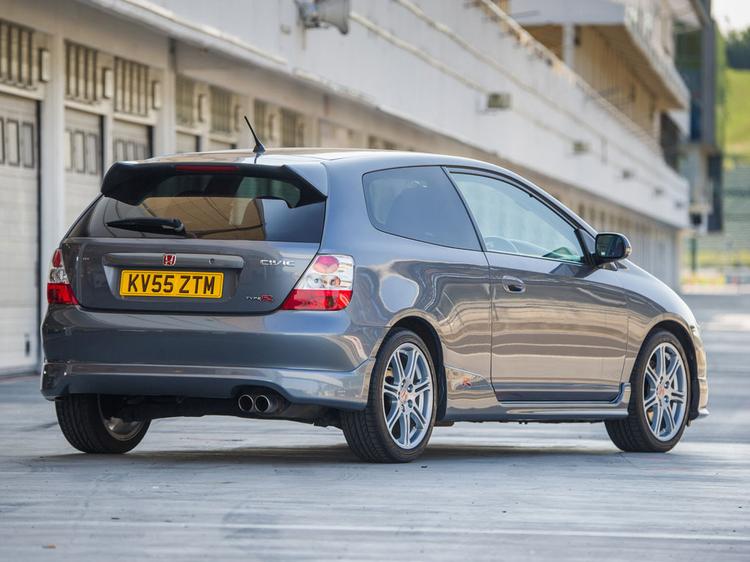
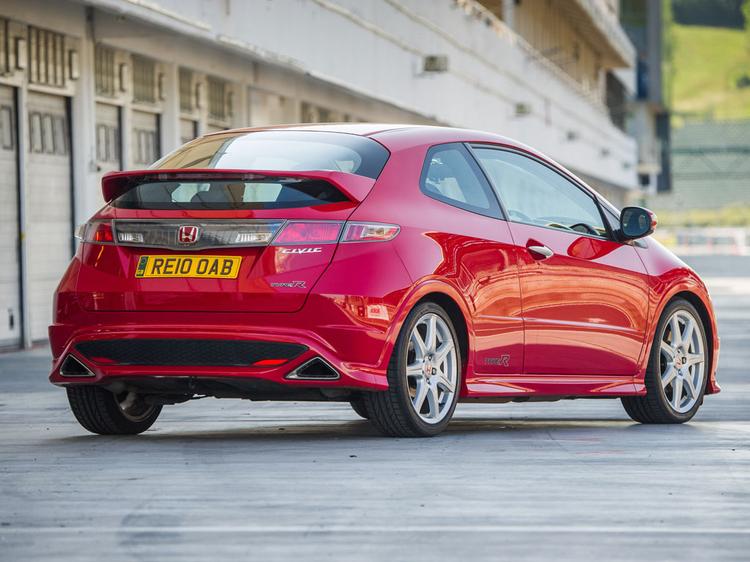
Yes, it is just the three cars. Honda doesn't have an EK9, FD2 or the Japanese-spec EP3 with extra power and a limited-slip diff, so apologies to those expecting a full JDM VTEC extravaganza. Instead we have a late (2005) EP3 UK Civic Type R, a 2010 FN2 and the current FK2. Can a turbo Type R really excite? Does the EP3 feel like a relic? When does the VTEC really kick in? To the track!
EP3 Civic Type R
'200hp for £16K!' screamed the coverlines on the EP3 Civic Type R's arrival. It's easy to forget what a big deal that was 15 years ago; not only was this the cheapest Type R ever offered (both the Accord and Integra were over £20K), it also looked great value in the hot hatch market.
As an impressionable pre-teen back then, and with Gran Turismo consuming every possible waking moment, the EP3 Civic Type R was a real hero car. It still is, in fact, so expectations were running high.

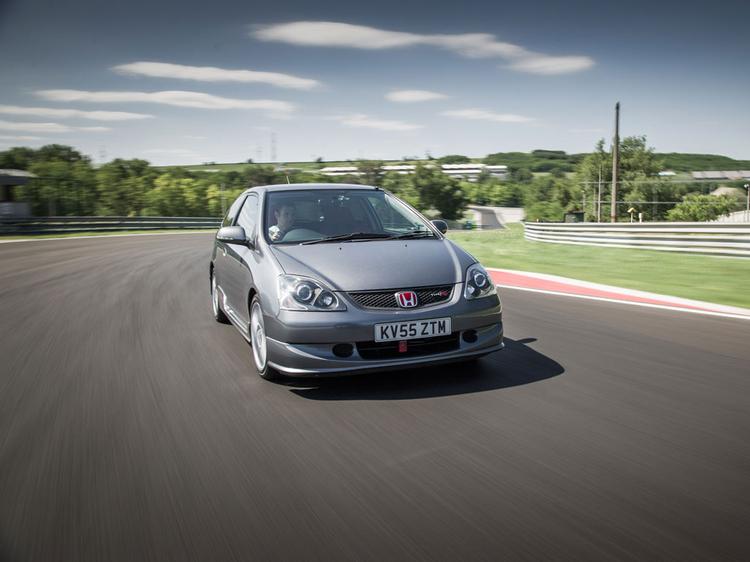
We start with low-speed tracking pics, but immediately the eagerness of that powertrain shines through. Having spent a while in the turbocharged car the way it responds to every little throttle input is joyous. Time to get rid of the photo car...

With the freedom of the circuit the EP3 can really be driven and - you've guessed it - the engine stars. It just keeps on revving and sounds feral, that glorious six-speed manual the perfect match. You will have heard all this before, but to have a naturally aspirated engine shriek to beyond 8,000rpm in a world where even Ferraris have to be turbocharged is just so exciting.

The handling is OK. This was a brief drive in Honda's heritage car but there's enough to sense some real agility and an eagerness from its relatively low mass. The Internet says the electric steering in facelifted cars like this one is improved on the original, but it still doesn't communicate enough about what's going on under the tyres. There's also a sense a contemporary Renaultsport product might have a little more finesse to the way it deals with bumps and changes in grip. Still, the EP3 remains an absolute hoot, largely because of that powertrain. It may seem an obvious one for a track project but with good reason - can the FN2 match it?

EP3 onboard


FN2 Civic Type R
There's a common belief , thanks in part to a certain television show, that the FN2 can't match the EP3's fun factor, that it's a poor relation and a rather duff Type R.
Sadly, while it would have been nice to confound those expectations, the later Civic is disappointing after the first UK Type R. The performance is still there if you work for it and the steering feel is improved, but elsewhere it struggles to move the fast Honda game on. Even on a circuit it feels stiffer than the EP3 but also oddly inert as well. The keenness from the older car is gone, replaced with a balance set to understeer and not a lot else. This isn't at far fetched journalist-trying-to-be-a-racer speeds either, as the laptimes aren't dissimilar to the older car. It wants to push almost as soon as you've turned in, which just isn't fun. Sadly the Mugen that promised so much on the road isn't available in Hungary, because it would surely have shown off the FN2 era in a far better light. As it stands the FN2 will remain the unloved Type R, even in this later specification with the limited-slip diff from the Championship White limited edition. This one looks rather fun with 350hp though...

FN2 onboard


FK2 Civic Type R
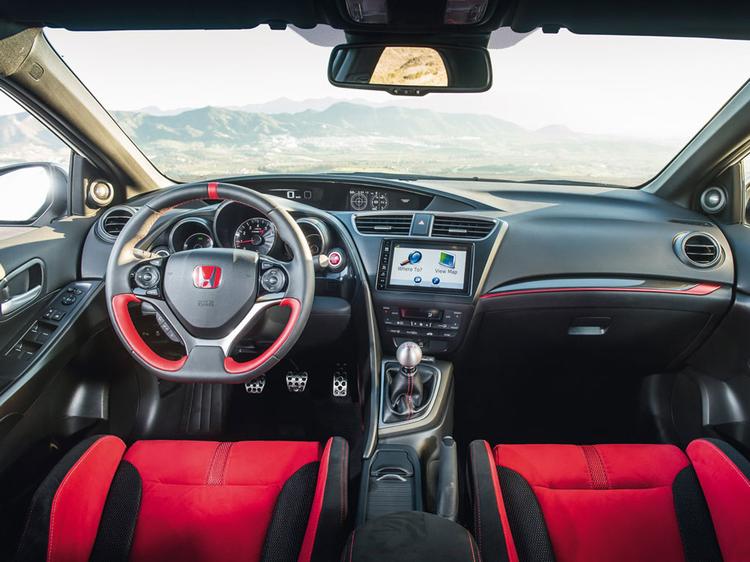
Now it gets serious. Yes, we've driven the current Type R on track in quite a few situations, but to compare it back-to-back with its predecessors reveals starkly just how far this car has moved the Civic on.
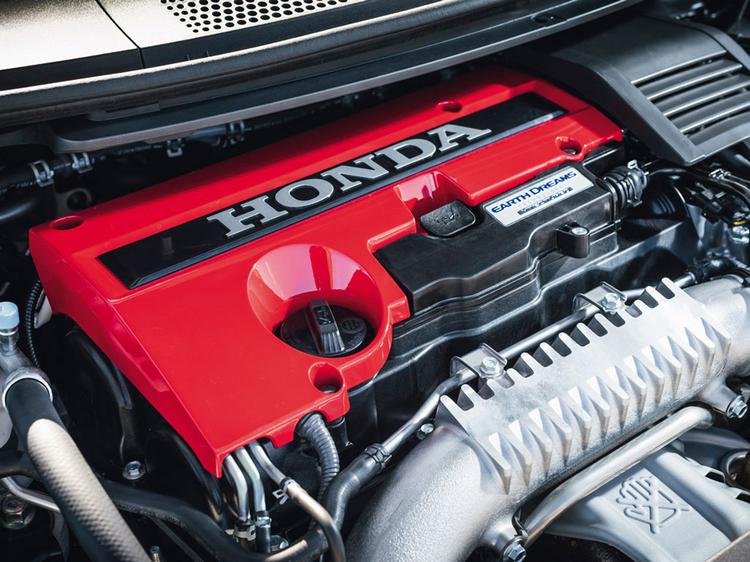
The FK2 Civic Type R always feels fast, but in the company of the other two it's savagely rapid. It's pulling so much harder from much lower down that the lack of a bonkers top end feels almost worth it for the massive increase in performance. Almost.

The gearbox is still fantastic, the brakes on another planet compared to the other two and traction better than the FN2 despite twice the torque. It's an absolute animal on the circuit, hugely composed over the Hungaronring's bumps and goading you into ever more optimistic brake and turn-in points. Yes, the tyres may not be as sticky as true track heroes would like and, yes, a Megane is probably more playful, but as a demonstration of how fast front-wheel drive can be the Type R is sublime.

It's interesting to note too the similarities between the cars too. In all three the gearbox is great and the steering wheel very good (despite the introduction of more buttons), but the seat always a little too high. While we're on gripes it's sad to report how much worse visibility is; it feels like there's acres of glass in the EP3 and a great view everywhere, which gradually declines with the FN2 and the current car as the spaceship design, er, took off. Shame.

FK2 onboard


Verdict
Given the age and value gap between these three, this was never going to be a conventional triple test. More it was to see how far the Civic Type R has evolved in 15 years, where it has been good and where it could have improved.
The EP3 is a right giggle; perhaps it’s not the most finely wrought hot hatch around but there’s sufficient excitement as standard and plenty of potential too. I’d love to try one of the Japanese cars with the limited-slip diff and additional power, just to see if it’s good as Gran Turismo suggested. Hopefully the seat has been dropped in that one too…

The FN2 does feel like a backwards step sadly. Perhaps that would have been different with the Mugen but then that was nearly £40K when new – it’s a significantly more focused car. If you really can’t stand the looks of the original car then go for the FN2, but otherwise it’s quite hard to recommend. Sorry.

The current car feels about three generations on from the FN2; not simply in terms of performance but in the way it feels so much more better built and structurally rigid too. It’s a different kind of car to those that preceded it, but arguably a more complete and competitive hot hatch than it’s ever been.
This Civic Type R can learn some things from the old ones though. It needs better throttle response, for starters, but a few more revs would be good as well. Of course we won’t get 9,000rpm again, but for now the Type R doesn’t really rev any higher than its rivals. The engine feels really keen, and a redline of 7,500rpm would give it a selling point over its numerous competitors. That being said, for Honda to have returned to the Civic Type R with a car so far improved from the one before it is to be applauded. Let’s hope the progress continues over the next 15 years.


HONDA CIVIC TYPE R (EP3)
Engine
: 1,998cc, 4-cyl
Transmission: 6-speed manual, front-wheel drive
Power (hp): 200@7,400rpm
Torque (lb ft): 145@5,900rpm
0-62mph: 6.6sec
Top speed: 146mph
Weight: N/A
MPG: 31.7
CO2: 212g/km
Price: £15,995 (2001)
HONDA CIVIC TYPE R (FN2)
Engine
: 1,998cc 4-cyl
Transmission: 6-speed manual, front-wheel drive
Power (hp): 201@7,800rpm
Torque (lb ft): 142@5,600rpm
0-62mph: 6.6sec
Top speed: 146mph
Weight: N/A
MPG: 31
CO2: 215g/km
Price: £17,600 (2007)
HONDA CIVIC TYPE R (FK2)
Engine:
 1,996cc 4-cyl turbo
Transmission: 6-speed manual, front-wheel drive
Power (hp): 310@6,500rpm
Torque (lb ft): 295@2,500-4,500rpm
0-62mph: 5.7 sec
Top speed: 167mph
Weight: 1,467kg (Honda figure, with fluids and driver)
MPG: 38.7mpg (Honda internal figure)
CO2: 170g/km (Honda internal figure) 
Price: £29,995


Source;
http://www.pistonheads.com/features/ph-features/honda-civic-type-r-generations-ep3-v-fn2-v-fk2/34428