Wow, really good artical....
 |
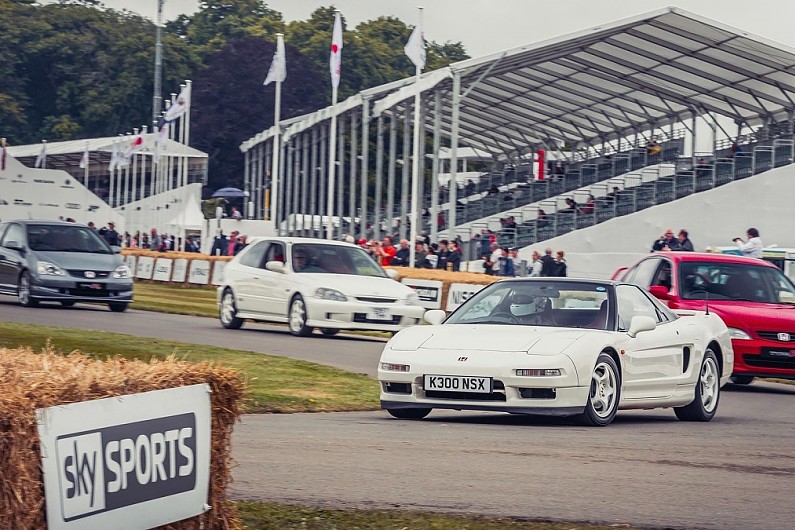
| The original NSX Type-R revealed the spirit of Honda's original RA 272, but in road-going form. |
From the
spidery RA 272 race car to the NSX-R, Honda's Type-R moniker gave us
some of the best-handling cars on the planet
Mexico City, 1965 –
It is late October, and the final round of the Formula One racing season
is drawing to a close. It will be the last race of the
small-displacement 1,500 cc racers and their fragile, cigar-shaped
bodies gleam in the Mexican sun.
Qualifying was a challenge, here in the
high, thin air of the Mexican capital, and it came with a surprise or
two. Parked at the head of the pack is a pure white torpedo, emblazoned
proudly with the red circle of the Japanese rising sun.
While racing legends like Jackie Stewart,
Jim Clark, and Dan Gurney fuss and prod with their British-built Lotus
and Brabham racecars, the spidery little Honda
RA 272 sits ready. It looks like a rocket pod fitted with outsize
landing gear, and tucked behind its cramped cockpit is a 1.5-litre V12
built essentially out of motorcycle engines.
It’s been a frustrating season for the Honda
team. A Japanese car has never won a Grand Prix race, and given the
cheap and cheerful nature of the fuel-sipping runabouts the country
exports, the idea it’s even here seems faintly ludicrous. Somehow, this
upstart has qualified first, but it’s mere accident – surely, the Honda
will just be an obstacle for the others to get around.
 |
| The
1965 Mexican Grand Prix was the final race for the Honda RA 272. But
that didn’t matter since it led all 65 laps and carried the first red
Honda badge to victory. |
Engines roar to life on the starting grid.
The track marshal waves the green flag. The little white RA 272 spins up
its V12 to 14,000 rpm and blitzes the field, leading all 65 laps. As it
noses across the finishing line taking the checkered flag, it carries
that first red Honda badge to victory.
The legend of the Type-R is about to be
born. And then for a while, to quote Krusty the clown, nothing happened.
Toyota made the luscious 2000GT. Datsun and Nissan built the Z-cars and
the scrappy 510. Even Mazda had a kick at sports car supremacy with the
RX-7.
Honda made plenty of interesting and unique
cars, but never anything that could really be considered legendary. All
that changed, of course, with the reveal of the Acura
NSX. To give you some idea of how much of an impact the mid-engined,
high-tech, ultra-light NSX had on its debut, imagine coming across a
McLaren P1 with a Daewoo badge on its nose. It was a gauntlet flung in
Ferrari’s face, and quickly developed a following. Even today,
twenty-five years later, it’s still a car with cult status.
The only problem is, it wasn’t good enough for Honda.
In 1992, for the Japanese home market only,
Honda revealed the spirit of their original RA 272 in road-going form,
with the NSX Type-R. Fittingly, it appeared again shrouded in
Championship White, with a red Honda badge on the nose.
 |
| To
give the NSX its Type-R credentials, Honda finely balanced the engine’s
rotating assembly with the same process as its F1 engines. It also
reduced gear ratios, added a more aggressive limited-slip differential
setup and cut curb weight to 1,230 kilograms. |
Distilling the NSX formula to cask-strength
took quite a bit of fiddling. The engine was not increased in size, but
in order to improve that characteristic high-revving performance, it was
lightened. The rotating assembly was finely balanced using essentially
the same process as Honda’s F1 engines. Gear ratios were reduced to
provide better on-track acceleration at the cost of maximum top speed
and fuel economy, and a more aggressive limited-slip differential was
installed.
Most impressively, Honda’s engineers managed
to take a full 120 kilograms out of the curb weight of the already
feather-light NSX. That’s the equivalent of asking Rob Ford to get the
hell off your hood. Total weight now tipped the scales at 1,230
kilograms– less than a modern Civic – and the new, carbon-fibre bodywork
provided real downforce at speed.
With the suspension also lightened and tuned, the NSX-R took Honda’s samurai sword to atom-splitting sharpness.
While it was never released outside of Japan, its battles with the
likes of the Nissan GT-R at the serpentine Suzuka Circuit captured the
imagination.
For a new generation who had grown up around
Japanese performance, the idea of an extremely high-performance Honda
was not unusual, just unobtainable. Happily, the next car to carry
Honda’s highest honour was bound for foreign shores.
 |
| Even
to this day, the Integra Type R remains one of the best handling
front-wheel-drive cars. It also found its way to North America under the
Acura nameplate. |
The Integra Type-R had that most rare of
dream-car attributes: you could actually afford one. And, as it happens,
if you couldn’t afford it, they were incredibly easy to steal. But
don’t do that, no matter how tempting the idea of a stripped-out,
hardcore, stratospherically-revving coupe might be. Yes, the Integra was
a front-wheel-drive car, but it was also the front-wheel-drive car. For a long time, it was the best-handling front-driver that money could buy.
And you got a lot for your money (or your
strategically used slim-jim). The Integra Type-R had a lowered,
stiffened suspension, larger brakes, a stiffer chassis, specially-tuned
ABS and a helical limited-slip differential, aerodynamic improvements
that reduced lift at speed, and weighed 45 kilograms less due to
obsessive engineering like thinner glass for the windshield.
Oh, and an engine. What an engine. Even
today, the B18C5′s 195 horsepower from just 1.8L is impressive, and the
way it screams all the way past 8,000 rpm shows it to be a direct
descendant of the RA 272.
There is, it has to be said, not very much
in the way of torque. With just 130 lb.-ft., the Integra Type R would
have trouble getting a pickle jar open. Still, all the other little
tweaks – the diecast engine stiffener, the hand-polished intake and
exhaust ports – created a jewel of a car, greater than the sum of its
parts.
 |
| The
Integra Type-R’s B18C5 four-cylinder engine pumps out an impressive 195
horsepower and screams to 8,000 rpm. But with 130 lb.-ft. of torque, it
could barely open a pickle jar. |
It was also directly responsible for the
first Civic Type-R, a car that would be perhaps even more famous. Based
on the lively EK-series hatch of the late 1990s, the Type-R designation
yet again turfed niceties such as sound-deadening material, and swapped
in go-fast stiffening and a screamer of an engine.
This time, Honda used a 1.6-litre engine
called the B16B: with 182 horsepower, it had even better
output-per-litre than its Integra cousin. Sadly, it was never bound for
Canadian streets, although enterprising Honda-heads could build their
own tributes by swapping in as many JDM parts as they could scrounge.
As with the Integra Type-R, Honda would now
hide its light under an Acura bushel. When it did sell its
high-performance offerings in Canada, it did so in the fancier showrooms
of its Acura dealerships, with the exception of cars like the S2000,
and the Civic Si and SiR.
For those in the know, it was even possible
to get close to the Type-R version of the humble Accord sedan. A
European-spec Accord was rebadged as the first generation Acura TSX
sedan and it’s still a hidden gem in the used car market, with a
dependable 2.4L four-cylinder putting out 200hp and an available
six-speed manual transmission.
 |
| Honda
offered the Accord Type-R and Euro R models in the mid- to late-2000s,
but the formula didn’t translate well to a big car. Simply put, it was
like putting hot sauce on a peanut-butter-and-jelly sandwich. |
The real Accord Type-R was never available
here, and was a bit of a sales failure where it was available. In an odd
move, it was actually developed in the UK, even as Honda Japan built a
similar car they dubbed the Accord Euro R. Where the type R formula of a
high-revving four-cylinder (a 2.2L in this case), stiffened chassis and
unforgiving suspension translated well to small cars, it didn’t do the
same for a family sedan – it was a bit like pouring hot-sauce onto a
peanut-butter-and-jelly sandwich.
Honda moved its attention back to smaller
vehicles, producing a next-generation Civic Type-R and an Integra
Type-R. While not quite as hard-core as the Japan-only offerings,
Canadian buyers could get close with the RSX and CSX Type-S. Sure, it
said Type-S on the back, but the 210-horspower 2.0L four-cylinder sure
sounded like it was branded with an R.
Now in Geneva, Honda is taking the wraps off yet another Type-R product
that will never make it this side of the pond. This time, they’ve
turbocharged their R formula, building a 2.0L forced-induction
four-cylinder that makes a lofty 280 horsepower. Of course we won’t get
it; they’d have to charge something like $45K for the thing, and who in
their right mind would pay that kind of money for a Honda Civic?
 |
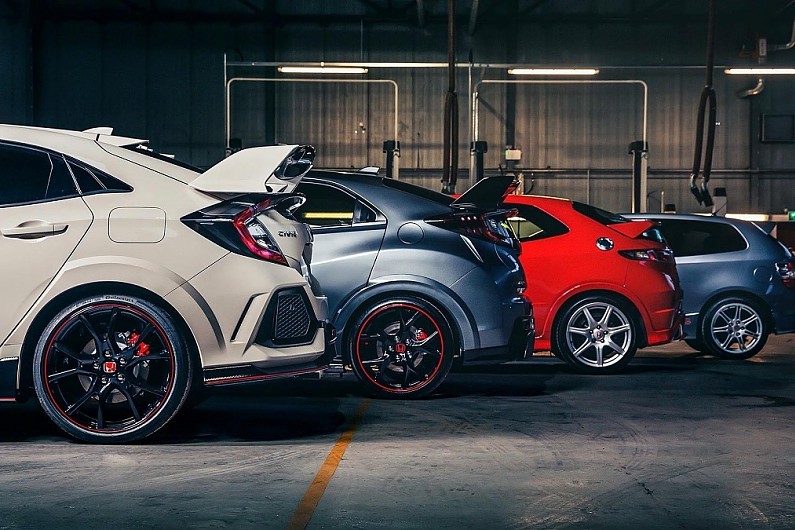
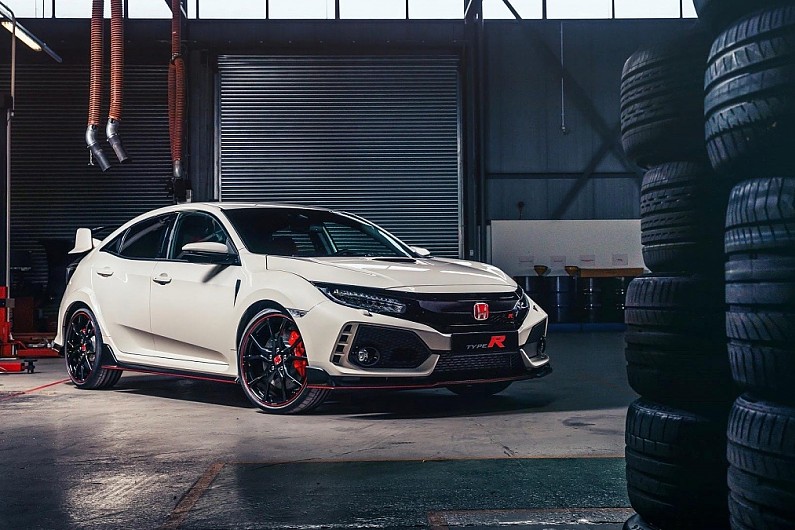
| Honda’s
latest Civic Type-R rocket made its debut at the 2014 Geneva Motor
Show. With a turbocharged 2.0-litre four-cylinder engine rated at 280
horsepower, it probably won’t make it to North America anytime soon. |
However, it’s not all bad news. While the
upcoming hybrid NSX is the halo that Acura badly needs, the rest of the
fleet is perhaps not so sporty. The TL has hidden reserves, and the
seven-seater MDX is a sensible choice, but there’s a gap crying out for a
car imbued with a little of that Type-R magic.
Let me finish with this thought: imagine a 280-horsepower turbo-four under the nose of the recently released TLX sport sedan concept. Suddenly, once again, those who underestimated a Honda would be struggling to keep up.
Source;